


Rising fuel prices, heavy traffic, and reliable ecosystem support accelerate VinFast e-motorcycle adoption in the Philippines.
Rising fuel costs make gasoline reliance impractical for commuters. Severe traffic congestion drives high demand for agile two-wheeler transport. Riders need strong after-sales support and dependable charging infrastructure. VinFast addresses these needs with flexible battery subscriptions and a growing swapping network. Models like the Evo, Feliz II, and Viper lower operating expenses. Long warranties ensure reliable ownership for local riders. These factors position the Philippines for widespread e-motorcycle adoption.
– Dee Lane | Traffic Network PH
3 Local Economic Conditions That Set the Stage for Widespread E-Motorcycle Adoption in the Philippines
OFFICIAL RELEASE: VinFast Philippines | PUBLISHER: ADVAI
The global rise in electric motorcycle adoption isn’t accidental. For the Philippines, the conditions driving it are already in place, and VinFast E-Motorcycle Philippines’ recent entry in the market has made the switch to electric motorcycle a practical choice.
Electric motorcycles are no longer a niche alternative — they are becoming the rational choice in markets where fuel is expensive, roads are congested, and ownership costs keep rising. Globally, the shift is well underway and the Philippines may be among the most ready markets for it.
Across Asia, the shift is already in motion. In Pakistan, electric two-wheeler registrations reached 134,494 in the first half of 2026, up 173.6% year-on-year. India is moving at a different scale: electric two-wheeler sales reached 1.36 million in the first eight months of 2026 and are on track to exceed 2 million by year-end. Vietnam, where VinFast leads the segment, saw electric models account for nearly 28% of all motorcycle sales through July.
The Philippines is not watching from the sidelines — it is next.
Fuel price volatility is driving the shift
Gasoline in the Philippines now sits at PHP 94.33 per liter, with a further PHP 2 to PHP 2.20 increase expected on October 13 — pushing premium grades past PHP 115 per liter in Metro Manila. For a country where motorcycles are the primary transport for millions of daily commuters, every adjustment at the pump is felt directly. The question is no longer whether electric motorcycles are viable. It is whether depending on gasoline still makes sense.
Traffic makes the motorcycle indispensable
Metro Manila’s daily vehicle volume has reached 3.8 million, with motorcycles accounting for the largest share at over 1.6 million units, according to MMDA and CPBRD data. The Philippines also ranked 16th in Numbeo’s 2026 mid-year global traffic burden index, with Filipino commuters averaging 41.7 minutes per one-way trip. In this environment, the motorcycle’s inherent advantage — the ability to move through gridlock that stops everything else — only grows more valuable. An electric motorcycle compounds that advantage further: lower operating costs, no fuel stops, and zero tailpipe emissions.
Demand for reliable EV ownership support
For Filipino riders, the hesitation around electric motorcycles has never been purely about price. It is about what happens after the purchase — who services the bike, what the warranty actually covers, and whether a charging or swapping station will be nearby when it matters.
These are questions that most players in the local e-motorcycle market have not convincingly answered. The third condition, then, is the gap in after-sales support and ownership infrastructure that has kept would-be buyers on the fence and the growing expectation that the right brand will close it.
Rewriting two-wheel mobility with VinFast ecosystem
VinFast’s answer to the ownership gap is a flexible model built around the battery. Riders can choose to subscribe to the battery at PHP 439 per month, which includes access to a nationwide battery-swapping network operated through V-Green. A swap takes less time than a fuel stop — depleted battery out, fully charged one in, and the rider is back on the road. For those who prefer outright ownership, the battery can be purchased and charged at home through a standard household outlet.
Over five years, VinFast estimates riders can save between PHP 40,000 and PHP 70,000 compared to a similarly positioned gasoline motorcycle, depending on usage and prevailing fuel prices. Financing is available through authorized dealerships for riders who prefer to spread the upfront cost.
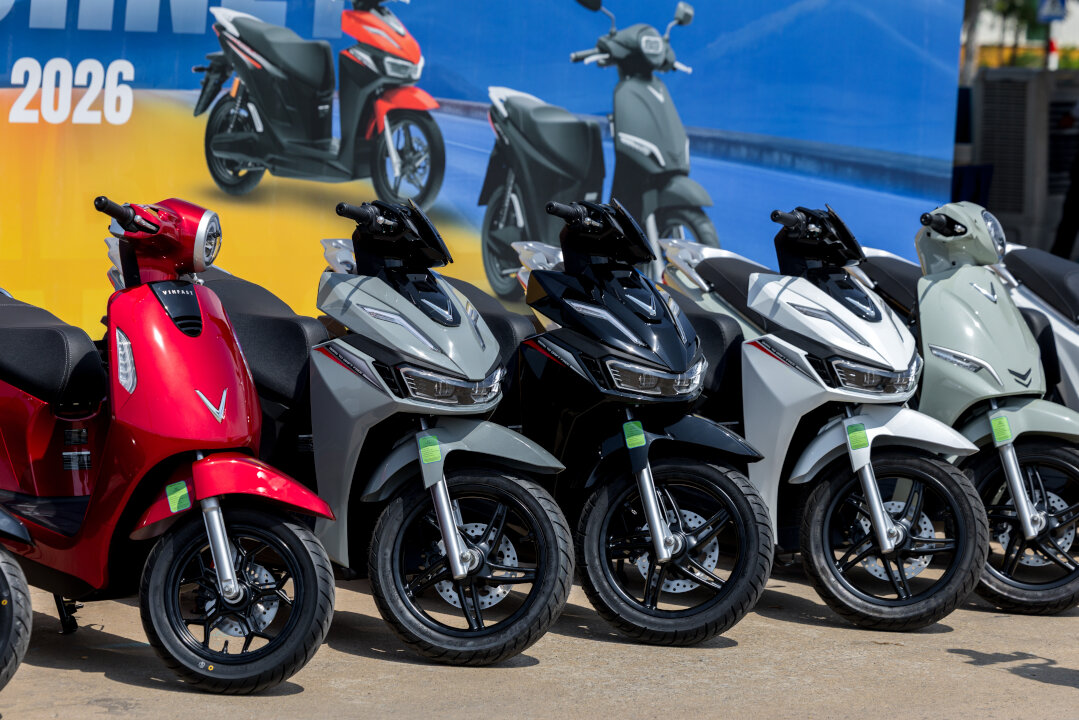
VinFast E-Motorcycle Philippines entered the market in July with three models: the Evo (PHP 62,900 with subscription), suited for daily urban commuting; the Feliz II (PHP 64,900), built for practicality and family use; and the Viper (PHP 73,900), the sportier option with stronger road presence. All three are covered by a 4+2-year / 60,000+12,000-km warranty — above the market standard — and backed by 28 dealerships nationwide with full after-sales service.
Vietnam offers the clearest preview of where this is headed. With VinFast leading the segment, electric models now account for nearly 28% of all motorcycle sales there — built on a track record of over 1 million electric motorcycles produced. Its battery-swapping network has grown to over 4,500 stations, with a target of 60,000 cabinets — more than the total number of gasoline stations in the country. The Philippines is next in line for the same build-out.
For VinFast E-Motorcycle Philippines, the mission is straightforward: make the electric two-wheeler the obvious choice for the Filipino rider — not as a future aspiration, but as the most practical decision available today.




Elevate your digital journeys in tech-driven mobility with Traffic Network PH powered by VinFast Philippines.


